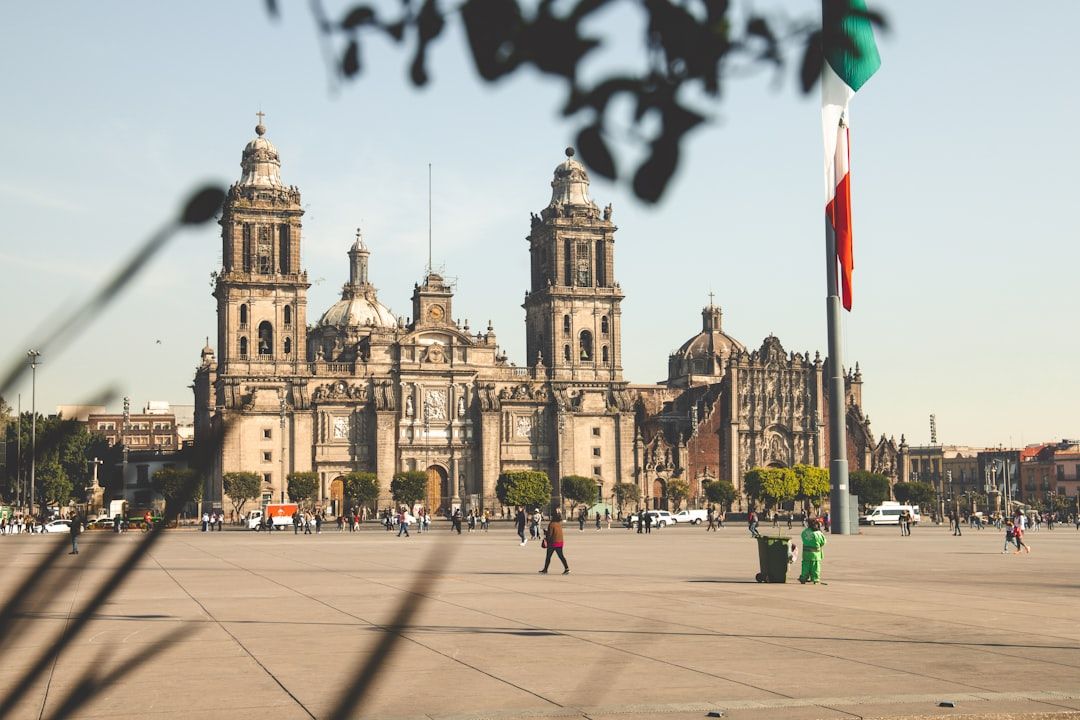
Mexico by Bus: Building a Route the Cheap Way
Mexico has no meaningful passenger rail network and does not need one. The long-distance bus system is genuinely excellent — reserved seats, air conditioning, toilets, and reliability that would embarrass several European rail operators. Building a route around it is the whole budget strategy.
The classes
| Class | Operators | What you get |
|---|---|---|
| Executive / lujo | ETN, ADO Platino | 3 seats abreast, deep recline, near-flat |
| First class | ADO, Primera Plus | 4 abreast, reclining, AC, toilet, direct |
| Second class | Regional lines | Frequent stops, no reservations, cheap |
| Colectivo | Local vans | Short hops, leaves when full |
First class is the workhorse and what you should default to for anything over two hours. Second class costs perhaps 40 percent less and stops constantly, which is fine for an hour between towns and miserable overnight. Colectivos are the cheapest way to cover short distances and are how most locals move between neighbouring towns.
ADO effectively owns the south and east — Yucatan, Chiapas, Oaxaca, Veracruz. ETN and Primera Plus dominate the centre and west. Book ADO online in advance; the fare is frequently lower than at the terminal.
Three routes that do not backtrack
The southern loop
Mexico City → Puebla → Oaxaca → San Cristóbal de las Casas → Palenque → Campeche → Mérida → Tulum → Cancún. Around three weeks. This is the classic and it works because it moves consistently east without ever doubling back, ending at an international airport.
The Oaxaca to San Cristóbal leg is the long one at roughly 11 hours overnight. It is also the leg where a first-class ADO ticket genuinely earns its price.
The central circuit
Mexico City → Querétaro → San Miguel de Allende → Guanajuato → Guadalajara → Morelia → back to Mexico City. Ten days to two weeks, all legs under five hours, and the cheapest region in the country for accommodation. Colonial cities, excellent food, very few long-haul visitors.
The Yucatán short trip
Cancún → Valladolid → Mérida → Campeche and back, or continuing to Palenque. One week. Be aware this is the most expensive corridor in Mexico — the Riviera Maya prices in dollars — so time spent in Valladolid and Mérida rather than Tulum makes a substantial difference to the daily number.
What the legs cost
| Leg | Time | First-class fare |
|---|---|---|
| Mexico City → Oaxaca | 6.5h | 600–900 MXN |
| Oaxaca → San Cristóbal | 11h overnight | 700–1,000 MXN |
| San Cristóbal → Palenque | 8h | 400–600 MXN |
| Mérida → Cancún | 4h | 500–700 MXN |
| Mexico City → Guanajuato | 5h | 600–800 MXN |
The practical notes
Overnight first-class buses are cold. The air conditioning is set aggressively and a fleece is not optional. Keep your daypack with you rather than in the hold, and take a photo of the luggage tag when you check a bag.
Terminals are often some distance from the centre and there are frequently several in one city serving different operators — confirm which one your ticket departs from rather than assuming.
Booking is relaxed outside three periods: Semana Santa, the Day of the Dead window around Oaxaca in late October, and Christmas through New Year. In those, book well ahead or expect to be stuck.
The daily number
45 to 70 dollars covers Mexico comfortably outside the Riviera Maya: 20 to 35 for a private guesthouse room, 15 to 20 eating at markets and taquerias, and the rest for buses and entries. Oaxaca and Chiapas sit at the bottom of that range. Tulum and Playa del Carmen sit above the top of it, which is worth knowing before the route is fixed.